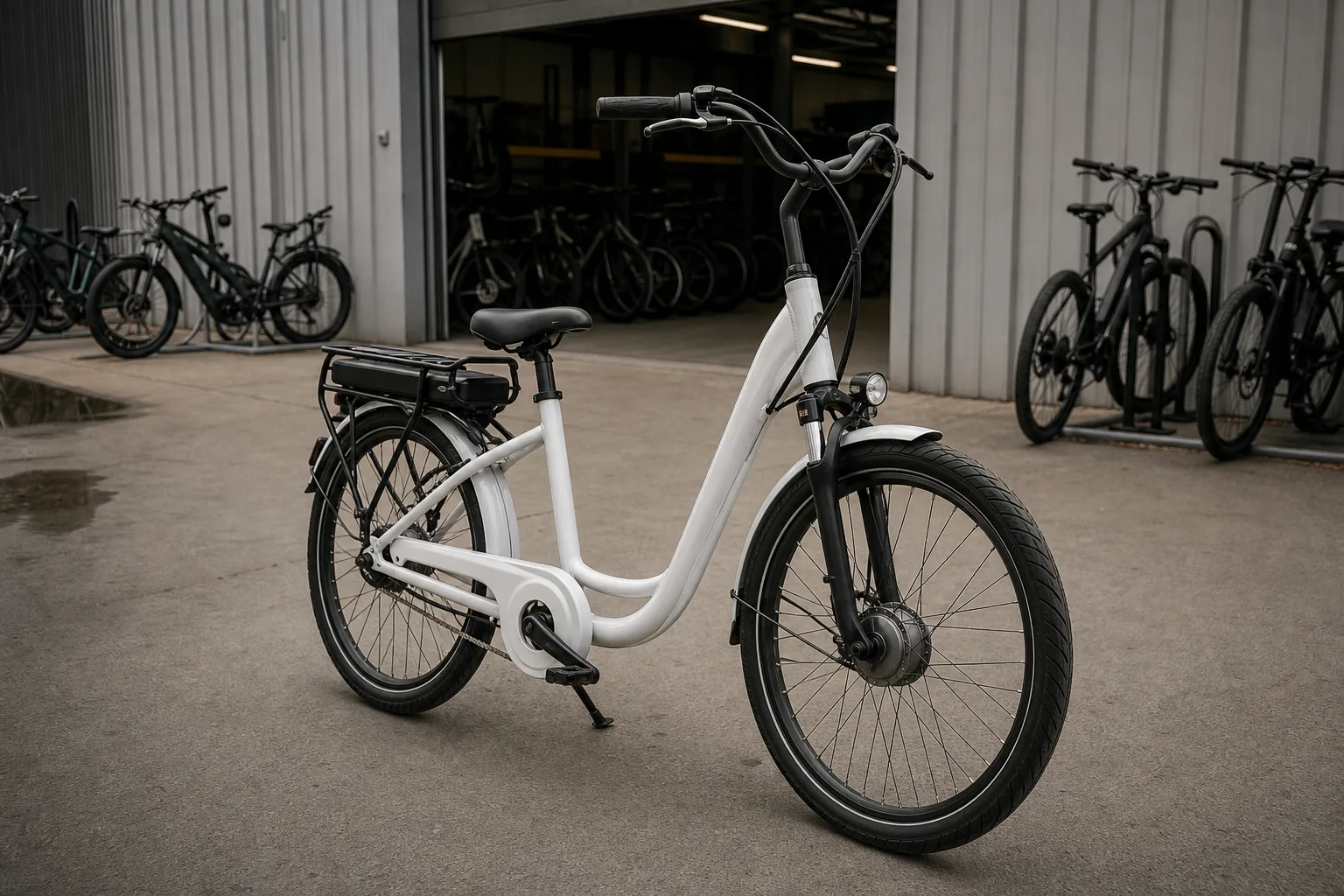
Most buyers pick a motor first and a frame second, which is backwards. The motor determines how the bike feels on a hill; the frame determines whether the bike gets ridden at all. A rider who mounts by swinging a leg over a high top tube six times a day will keep doing it for a month, then quietly stop, and the bike becomes a nine-hundred-dollar coat rack in the garage. Geometry is the cheapest variable to get right and the most expensive to get wrong, because no accessory fixes a riding position that hurts after twenty minutes.
The five frames, and the riding each one was drawn for
Five shapes dominate the consumer market, and each was drawn around a specific set of assumptions. The cruiser puts the rider upright, with swept-back handlebars, a long wheelbase, a wide saddle, and pedals set forward of the seat tube, which suits short trips at low speed on pavement. The commuter, sometimes sold as a hybrid or city bike, moves the bars lower and the pedals under the hips, trading comfort for efficiency over longer distances. Folding bikes shrink the wheelbase and use sixteen to twenty inch wheels so the whole machine fits a closet or a trunk. Cargo bikes stretch the frame to carry weight behind or in front of the rider. Fat-tire bikes widen the tires to roughly four inches for sand, snow, and gravel.
Those descriptions sound like preferences. They are closer to constraints. A cruiser ridden thirty miles at eighteen miles an hour puts the rider in a posture that catches wind and loads the tailbone, and no amount of gel saddle helps. A folding bike with twenty-inch wheels drops into more potholes than it rolls over, which is fine on smooth city blocks and punishing on a broken shoulder. The frame either matches the route or fights it every mile.
Why cruiser frames dominate flat coastal towns
In places like Santa Monica, Naples, Galveston, or the Jersey shore, the typical trip is under four miles, the grade is close to zero, the surface is paved and often sandy, and the rider is wearing sandals rather than cycling shoes. Every one of those conditions favors upright geometry: the step-through opening lets a rider mount without lifting a leg above hip height, the low standover means a foot reaches the ground at a stop, and the forward pedal position keeps knees comfortable with the saddle set low. This is why searches for an electric bikes beach cruiser cluster so heavily in flat coastal zip codes, and why local rental fleets in those towns are built almost entirely from that one shape.
The frame stops working in three identifiable situations. Sustained grades above roughly six or seven percent expose the narrow gear range that most cruisers carry, leaving the motor to do work the drivetrain should share. Distances past about twelve miles turn the upright posture into a wind wall. And a rider who needs to carry a second person or a week of groceries is asking a frame with a short rear triangle to do a cargo bike's job. Recognizing which of the three applies to a given route is usually a five-minute exercise with a map.
What each frame actually costs to own
Purchase price is the smallest part of the difference. Cruisers and commuters run standard 26 or 27.5 inch wheels and common tire sizes, so replacement tires and tubes are stocked by any shop and priced at the low end of the range. Fat tires are a different economy entirely: fewer sizes, fewer suppliers, and a per-tire cost that typically runs several times a standard hybrid tire, replaced more often if the bike sees pavement, because the soft compound was never meant for it. Cargo bikes carry proprietary racks, longer chains, and heavier-duty brakes, and a shop that does not stock the parts will order them, which adds days to every repair.
Storage is a cost too, and it is the one buyers underestimate. A cargo bike measures well past six feet and will not fit a standard apartment elevator or a hallway with a turn in it. A fat-tire bike is heavy enough that carrying it up a flight of stairs stops being realistic after the first week. Folding bikes solve that at the price of a stiffer ride and small-diameter tires that wear faster. The honest question is not which bike is best but which bike a rider will still be able to park in two years.
Who else rides the bike
Households that share one bike between two adults of different heights and different confidence levels end up with a step-through more often than not, because a low frame accommodates a wide range of inseams and makes the mount forgiving for the less experienced rider. That matters for maintenance as well. A shared bike accumulates miles faster, needs brake pads and chains sooner, and benefits from having parts that any local shop can fit the same day. The Consumer Product Safety Commission oversees bicycle construction and the lithium-ion battery packs these bikes use, and buying into a common frame standard tends to make replacement components and service straightforward.
Write down the three longest trips actually taken in the past month, the steepest hill on any of them, and where the bike will sit overnight. Those three answers narrow five frame types to one or two, well before any question of wattage comes up.